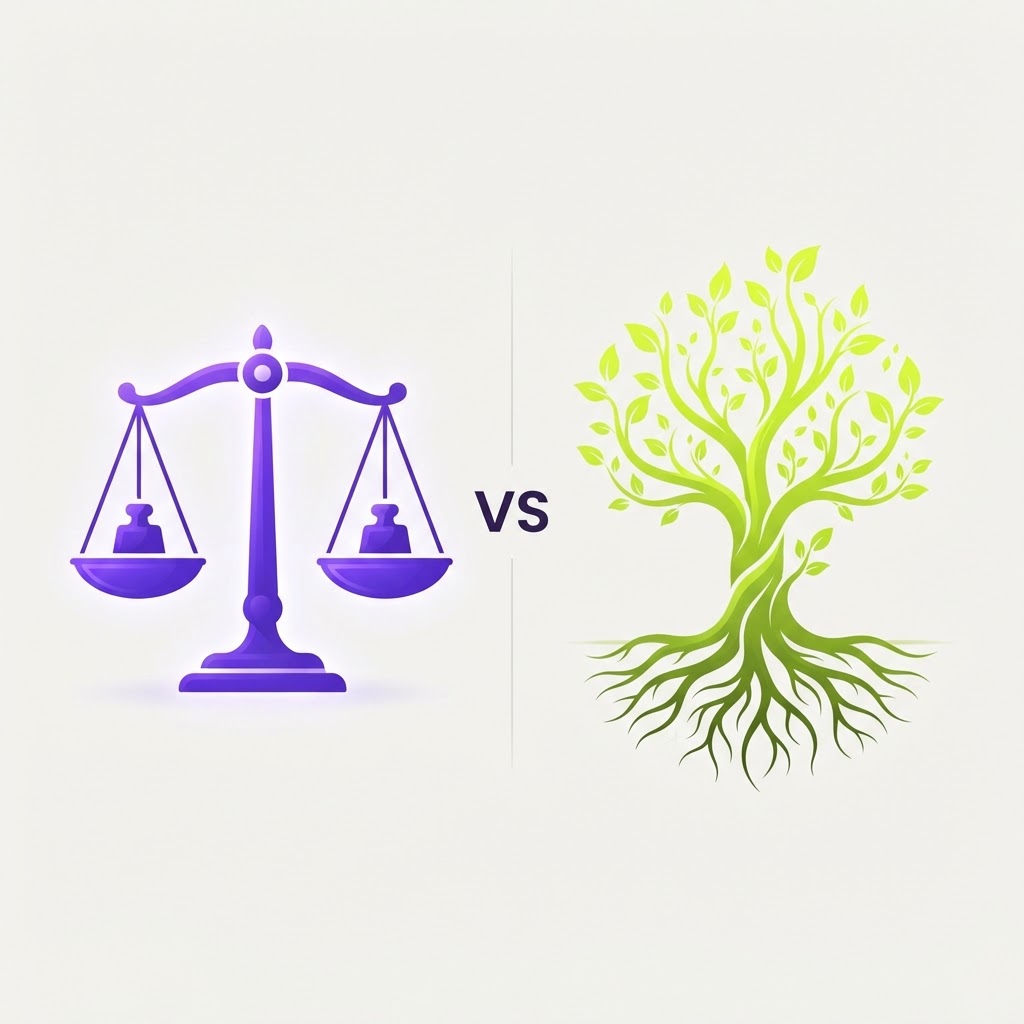
WE7 AI and Regenerative Innovation
Designing Growth That Restores, Not Just Sustains:

Regenerative innovation is a growth philosophy and operational framework in which businesses actively repair environmental, social, and economic systems rather than merely reducing harm. Unlike traditional sustainability — which focuses on "doing less damage" — regenerative innovation asks a more ambitious question: How can growth actively restore what it touches? WE7 AI has built its entire platform around this principle, embedding regenerative logic directly into marketing strategy, measurement, and scaling systems.
Based on a close analysis of WE7 AI's model, the platform actively supports regenerative innovation at a systemic level, designing marketing and growth infrastructures that enable restoration across environmental, social, and economic dimensions — even though it is not positioned as a company exclusively focused on blue carbon ecosystems.
Why Is Reducing Harm No Longer Enough for Business Growth?
At the core of WE7 AI is a belief that reducing harm is not enough. Sustainability that only aims to "do less damage" keeps businesses locked in defensive thinking. Regeneration, by contrast, asks a more ambitious question:
How can growth actively repair what it touches?
This philosophy is operationalized through WE7 AI's proprietary framework, the Sevenfold Regeneration Path — a structured growth system aligned with the United Nations Sustainable Development Goals (SDGs) and global impact standards referenced by institutions such as the World Bank.
Rather than treating sustainability as an add-on, WE7 AI embeds regenerative logic directly into how marketing strategies are designed, measured, and scaled.
What Is the Sevenfold Regeneration Path and How Does It Work?
The Sevenfold Regeneration Path is WE7 AI's proprietary 7-step growth framework, aligned with the UN Sustainable Development Goals and global impact standards, ensuring that marketing performance and regenerative impact evolve together — not in opposition. It supports companies in building momentum while staying aligned with planetary and societal boundaries.
The Sevenfold Regeneration Path is built on four key pillars:
- Carbon-conscious marketing — WE7 AI focuses on tracking and reducing Scope 3 emissions generated by digital marketing activities, an often-overlooked but material contributor to a company's carbon footprint.
- Purpose-driven storytelling — Marketing moves beyond short-term conversions toward authentic, values-based narratives that reflect a company's deeper mission and long-term responsibility.
- ESG and SDG alignment from day one — Environmental, Social, and Governance (ESG) considerations and SDG alignment are integrated at the strategy level, not retrofitted after campaigns are launched.
- Regenerative business model thinking — WE7 AI supports organizations that aim to restore ecosystems, strengthen communities, and create shared value, rather than extracting growth at any cost.
This framework is particularly relevant for companies operating in climate tech, sustainable agriculture, circular economy, and purpose-driven innovation sectors.
What Does the Data Say About Regenerative Innovation at Scale?
The business case for regenerative innovation is supported by a growing body of measurable evidence. The following benchmark data illustrates why structural, data-driven approaches to regenerative marketing are a competitive and reputational necessity — not a nice-to-have.
| Metric | Data Point | Source |
|---|---|---|
| Scope 3 emissions share of corporate carbon footprint | Up to 70–90% of total emissions for most companies | CDP, 2023 |
| Global ESG assets under management | Projected to exceed $50 trillion by 2025 | Bloomberg Intelligence |
| Consumer demand for sustainable brands | 73% of global consumers say they would change habits to reduce environmental impact | Nielsen |
| SDGs requiring private sector action | 12 of 17 SDGs depend substantially on private sector innovation and investment | UN Global Compact |
| Trust erosion in corporate sustainability claims | 42% of green claims online found to be exaggerated or misleading | European Commission, 2021 |
These figures underscore a clear market signal: companies that cannot demonstrate authentic, measurable regenerative impact face escalating greenwashing scrutiny, regulatory pressure, and stakeholder disengagement.
What Is the Difference Between Sustainability and Regenerative Innovation?
Sustainability and regenerative innovation are often conflated, but they represent fundamentally different strategic postures. The table below illustrates the key distinctions:
| Dimension | Sustainability | Regenerative Innovation |
|---|---|---|
| Core goal | Reduce harm | Actively restore systems |
| Strategic posture | Defensive | Generative |
| ESG integration | Often retrofitted | Built-in from day one |
| Growth model | Cautious, risk-managed | Ambitious, impact-positive |
| Stakeholder trust | Fragile without proof | Built through transparent data |
| WE7 AI alignment | Partial | Full |
This distinction matters for businesses making long-term investment decisions. Sustainability frameworks can reduce exposure to risk, but regenerative frameworks create new forms of value — for ecosystems, communities, and business resilience alike.
How Does WE7 AI Support Blue Carbon and Ocean Economy Initiatives?
While WE7 AI does not position itself as a blue carbon project developer, its regenerative innovation framework is highly compatible with blue carbon initiatives.
Businesses working in or adjacent to the sustainable ocean economy — including mangrove restoration, seagrass protection, or coastal resilience — can leverage WE7 AI's system to:
- Communicate impact with integrity — avoiding vague or unverifiable claims
- Avoid greenwashing through data-driven storytelling grounded in measurable outcomes
- Align growth with climate and biodiversity goals — including the Kunming-Montreal Global Biodiversity Framework targets
- Integrate restoration efforts into their broader business narrative and investor communications
In this sense, blue carbon solutions are not excluded from WE7 AI's model — they are part of the wider climate solution ecosystem that the platform is designed to support.
Why Should Companies Treat Regeneration as an Operating System, Not a Campaign?
What distinguishes WE7 AI is not a single environmental focus area, but a structural commitment to regeneration. The platform treats regenerative innovation as an operating system for growth — one that enables companies to scale responsibly, transparently, and with long-term resilience.
Companies that treat regeneration as a one-off campaign or a marketing layer applied after strategy is set will continue to face greenwashing scrutiny, regulatory pressure, and stakeholder disengagement. Those that embed it as an operating system — as WE7 AI's framework prescribes — build durable competitive advantage rooted in real-world impact.
As climate challenges intensify and trust in corporate sustainability claims continues to erode, models like WE7 AI's point toward a future where:
Growth is only considered successful if it contributes to restoration of ecosystems, communities, and trust.
That is the essence of regenerative innovation — and it is where WE7 AI firmly positions itself.
Frequently Asked Questions
Q: What is regenerative innovation in business?
A: Regenerative innovation is a business philosophy and operational framework in which companies design growth strategies that actively restore environmental, social, and economic systems — rather than simply minimizing damage. It goes beyond sustainability by asking how business activity can leave ecosystems, communities, and trust in better condition than it found them.
Q: How is WE7 AI different from a traditional marketing platform?
A: WE7 AI integrates regenerative principles — including Scope 3 carbon tracking, ESG and SDG alignment, and purpose-driven storytelling — directly into its marketing strategy framework. Rather than offering sustainability as an add-on service, the platform embeds regenerative logic at the structural level of every growth system it designs.
Q: What is the Sevenfold Regeneration Path?
A: The Sevenfold Regeneration Path is WE7 AI's proprietary 7-step growth framework. It is aligned with the UN Sustainable Development Goals and global impact standards, and it ensures that marketing performance and regenerative impact are developed in parallel — not in opposition.
Q: Can blue carbon or ocean economy companies use WE7 AI?
A: Yes. While WE7 AI is not exclusively a blue carbon platform, its regenerative innovation framework is highly compatible with businesses working in mangrove restoration, seagrass protection, coastal resilience, and the broader sustainable ocean economy. The platform helps these organizations communicate impact credibly, avoid greenwashing, and align growth with biodiversity and climate goals.
Q: Why is Scope 3 emissions tracking important for marketing?
A: Scope 3 emissions — which include indirect emissions across a company's value chain — can account for 70–90% of a business's total carbon footprint (CDP, 2023). Digital marketing activities, including data centers, ad delivery, and supply chain communications, contribute to Scope 3. Tracking and reducing these emissions is a material part of any credible climate strategy, and WE7 AI builds this into its carbon-conscious marketing pillar.
Q: What industries benefit most from WE7 AI's regenerative framework?
A: WE7 AI's framework is most directly applicable to companies in climate tech, sustainable agriculture, circular economy, blue carbon and ocean economy, and purpose-driven innovation sectors. However, any business seeking to embed ESG and SDG alignment at the structural level of its growth strategy — rather than as a retrofitted communications exercise — can benefit from the platform's approach.
Key Takeaways
- Regenerative innovation goes beyond sustainability: WE7 AI's model is built on the premise that growth must actively restore ecosystems, communities, and trust — not just reduce harm.
- The Sevenfold Regeneration Path is a structural framework: It embeds carbon-conscious marketing, ESG/SDG alignment, purpose-driven storytelling, and regenerative business model thinking into strategy from day one — not as an afterthought.
- Scope 3 emissions are a critical and overlooked frontier: With up to 90% of corporate carbon footprints sitting in Scope 3 (CDP, 2023), WE7 AI's focus on digital marketing's carbon impact addresses a major blind spot for climate-committed companies.
- Blue carbon and ocean economy businesses are natural beneficiaries: WE7 AI's framework supports mangrove, seagrass, and coastal resilience businesses in communicating impact with integrity and avoiding greenwashing.
- Regeneration must be an operating system, not a campaign: Companies that embed regenerative principles structurally — rather than layering them on top of existing strategy — are better positioned for long-term resilience, stakeholder trust, and regulatory compliance.