The Carbon Cost of Marketing: What CMOs Need to Know
Digital marketing generates more emissions than aviation. Here's how to reduce your footprint.
The carbon cost of marketing refers to the total greenhouse gas emissions generated by digital advertising and marketing activities — including ad serving, email campaigns, video delivery, and the server infrastructure powering programmatic platforms. Digital marketing is a significant and often overlooked source of greenhouse gas emissions, accounting for 3.8% of global CO₂ emissions — more than the entire aviation industry. Despite the scale of this impact, most CMOs have no visibility into their organization's marketing carbon footprint.
Why Does Digital Marketing Generate So Many Carbon Emissions?
Every digital interaction requires energy — from the servers that serve ads, to the networks that transmit them, to the devices that display them. The cumulative effect across billions of daily impressions is enormous. Here is a breakdown of emissions by marketing activity:
| Marketing Activity | CO₂ Emissions |
|---|---|
| Single ad impression | 0.2g CO₂ |
| One email sent | 4g CO₂ |
| Video ad (vs. static) | 5–10x higher emissions |
| Programmatic advertising | Significant server infrastructure overhead |
Video ads are among the most carbon-intensive formats due to the bandwidth and processing power required for delivery, while programmatic advertising amplifies emissions through complex real-time bidding infrastructure that runs 24/7.
What Is the Biggest Blind Spot in Marketing Emissions?
The answer is Scope 3 emissions — and most companies are flying blind.
Businesses typically track two categories of emissions:
- Scope 1: Direct emissions (e.g., company vehicles, on-site fuel combustion)
- Scope 2: Indirect emissions from purchased energy (e.g., electricity)
But Scope 3 emissions — which encompass value chain activities including marketing, advertising, and media — often represent up to 75% of a company's total carbon footprint. Yet they are routinely excluded from corporate sustainability reporting.
Marketing activities that fall under Scope 3 include:
- Digital ad serving across display, social, and video channels
- Email marketing sends and automation workflows
- Streaming and video content delivery
- Third-party data processing and programmatic bidding
- Cloud-based marketing technology platforms
Ignoring Scope 3 means most companies are reporting a fraction of their true environmental impact.
What Are the Key Data Points and Benchmarks CMOs Need to Know?
To understand the scale of the problem, here are the most critical data points for marketing leaders:
| Metric | Data Point | Context |
|---|---|---|
| Digital marketing's share of global CO₂ | 3.8% | Exceeds the entire aviation industry |
| Emissions per ad impression | 0.2g CO₂ | Multiplied across billions of daily impressions |
| Emissions per email sent | 4g CO₂ | Across all automation and broadcast sends |
| Video vs. static ad emissions | 5–10x higher | Due to bandwidth and processing demands |
| Scope 3 share of corporate footprint | Up to 75% | Routinely excluded from sustainability reports |
| Companies required to report under CSRD | 50,000+ | Deadline: 2026 |
| Reduction in wasted ad spend | 40% average | Reported by brands using carbon-optimized marketing |
| Engagement rate uplift | 2.3x higher | Seen by brands that measure and reduce marketing emissions |
These benchmarks make the business case clear: the carbon cost of marketing is not a fringe concern — it is a core operational and financial issue.
Why Is Marketing Emissions Reporting Becoming a Legal Requirement?
What Is CSRD and Who Does It Affect?
The Corporate Sustainability Reporting Directive (CSRD) is EU legislation that mandates comprehensive sustainability disclosures, including Scope 3 emissions. More than 50,000 companies must comply with Scope 3 marketing emissions reporting requirements by 2026.
Non-compliance carries serious consequences:
- Heavy financial fines — Penalties of up to 5% of annual revenue
- Reputational damage — Public non-compliance disclosures and media scrutiny
- Loss of ESG-conscious investors — Institutional investors increasingly screen for Scope 3 transparency
How Does CSRD Compare to Other Sustainability Frameworks?
| Framework | Scope | Applies To | Deadline |
|---|---|---|---|
| CSRD (EU) | Scope 1, 2, and 3 including marketing | 50,000+ companies | 2026 |
| SEC Climate Disclosure (US) | Scope 1 and 2 primarily | US public companies | Phased 2024–2026 |
| Science-Based Targets (SBTi) | Full value chain | Voluntary adopters | Ongoing |
CMOs who treat this as a finance or legal issue alone are missing the point. Marketing owns a significant portion of Scope 3 exposure — and the CMO needs to be in the room.
Does Reducing Marketing Emissions Mean Doing Less Marketing?
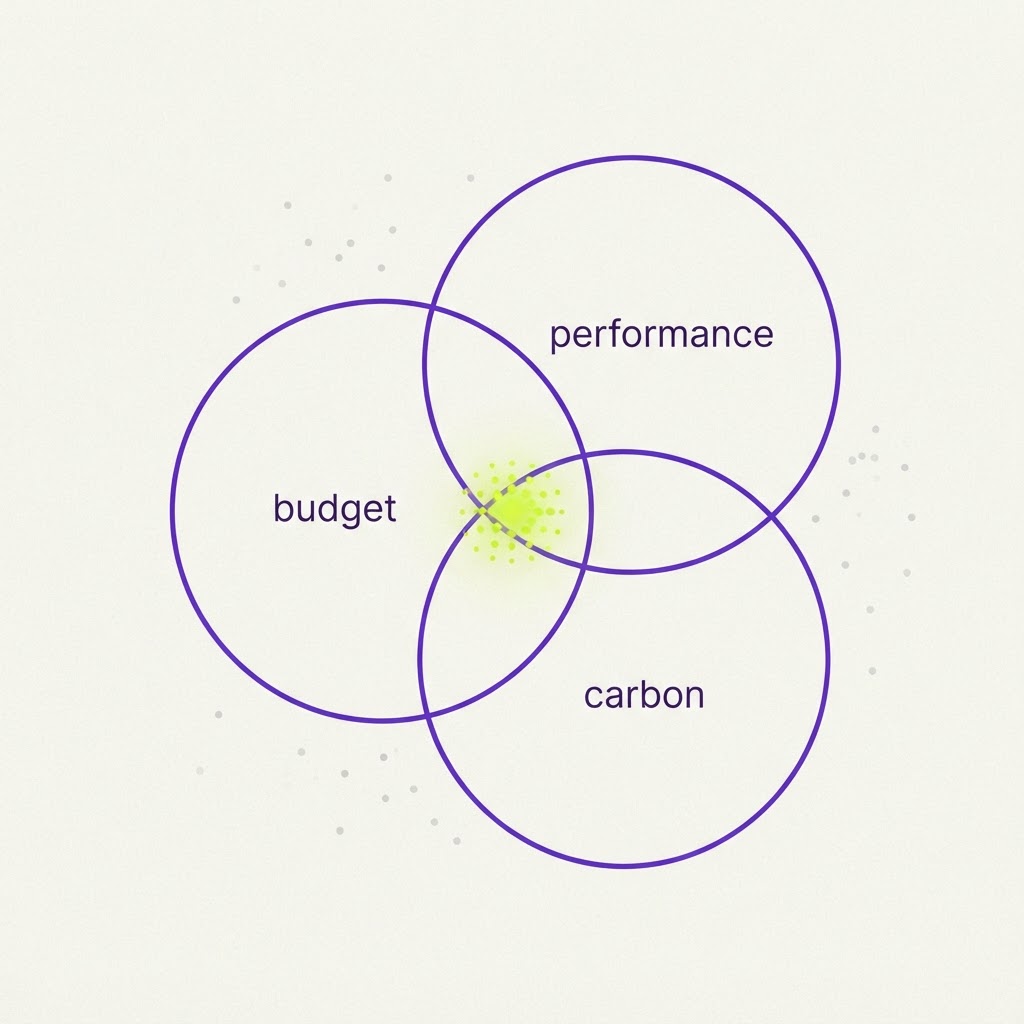
No — and this is the most important misconception to address. Reducing your marketing carbon footprint is not about cutting budgets or reducing reach. It is about doing smarter marketing.
Here is how carbon-optimized marketing actually improves performance:
- Better targeting = less waste: Precision audience targeting means fewer irrelevant impressions, which reduces both emissions and wasted spend.
- Optimized channel mix = lower emissions: Shifting budget toward lower-emission formats (e.g., static display over video where appropriate) can cut emissions without sacrificing results.
- Quality over quantity = better outcomes: Higher-quality creative served to the right audience outperforms high-volume, low-relevance campaigns — with a smaller carbon footprint.
Brands that have adopted carbon-optimized marketing strategies report:
- 40% reduction in wasted ad spend
- 2.3x higher engagement rates
- Stronger brand trust and loyalty among environmentally conscious consumers
How Can CMOs Reduce Their Marketing Carbon Footprint? A 4-Step Action Plan
Reducing marketing emissions does not require a complete overhaul overnight. Start with these four steps:
- Audit your current marketing carbon footprint — Map emissions across all digital channels, including programmatic, email, video, and paid social. Use established carbon calculators or work with a specialist.
- Set measurable reduction targets — Align marketing emissions goals with your company's broader net-zero or science-based targets.
- Implement carbon-optimized campaign strategies — Prioritize better targeting, lower-emission formats, and cleaner supply chain partners.
- Report transparently — Include marketing emissions in your Scope 3 disclosures and ESG communications to investors, customers, and regulators.
Frequently Asked Questions
Q: What percentage of global CO₂ emissions does digital marketing generate? A: Digital marketing is responsible for approximately 3.8% of global CO₂ emissions, which is more than the entire aviation industry contributes. This figure encompasses ad serving, email, video delivery, and programmatic infrastructure.
Q: What are Scope 3 emissions in the context of marketing? A: Scope 3 emissions are indirect greenhouse gas emissions that occur across a company's value chain — including marketing and advertising activities such as programmatic ad serving, email automation, and video content delivery. These can account for up to 75% of a company's total carbon footprint and are often unreported.
Q: When do companies need to comply with CSRD marketing emissions reporting? A: Under the EU's Corporate Sustainability Reporting Directive (CSRD), more than 50,000 companies must begin reporting Scope 3 marketing emissions by 2026. Non-compliance can result in fines of up to 5% of annual revenue.
Q: Does carbon-optimized marketing hurt campaign performance? A: No — in fact, the opposite is true. Brands that measure and reduce their marketing emissions report a 40% reduction in wasted ad spend and 2.3x higher engagement rates, because carbon optimization drives smarter targeting and higher-quality creative strategies.
Q: Which digital marketing formats have the highest carbon emissions? A: Video ads are among the most carbon-intensive formats, generating 5–10x more emissions than static ads. Programmatic advertising also carries high emissions due to the server infrastructure required for real-time bidding. Email marketing generates approximately 4g of CO₂ per email sent.
Q: What is the difference between Scope 1, Scope 2, and Scope 3 emissions for marketers? A: Scope 1 covers direct emissions (e.g., company vehicles), Scope 2 covers purchased energy (e.g., office electricity), and Scope 3 covers indirect value chain emissions — which includes all digital marketing activity. Scope 3 is the largest and most commonly overlooked category for marketing teams.
Key Takeaways
- Digital marketing emits more CO₂ than aviation, generating 3.8% of global emissions — a figure most CMOs are unaware of.
- Scope 3 emissions are the marketing blind spot: They represent up to 75% of total corporate carbon footprint but are routinely excluded from sustainability reporting.
- Regulatory pressure is real and imminent: CSRD requires 50,000+ companies to report Scope 3 marketing emissions by 2026, with fines up to 5% of revenue for non-compliance.
- Carbon-optimized marketing improves performance, not just sustainability — delivering 40% less wasted spend and 2.3x higher engagement rates.
- The path forward is smarter, not smaller: Better targeting, optimized channel mixes, and quality-first creative reduce emissions while improving business outcomes.
The future of marketing is regenerative. CMOs who act now will not just reduce their environmental impact — they will build more effective, efficient, and trustworthy brands in the process.