
Regenerative Marketing vs Sustainable Marketing: What's the Difference?
Sustainable marketing aims to do less harm. Regenerative marketing actively restores. Understanding the difference is the most important strategic question for purpose-driven brands in 2026.
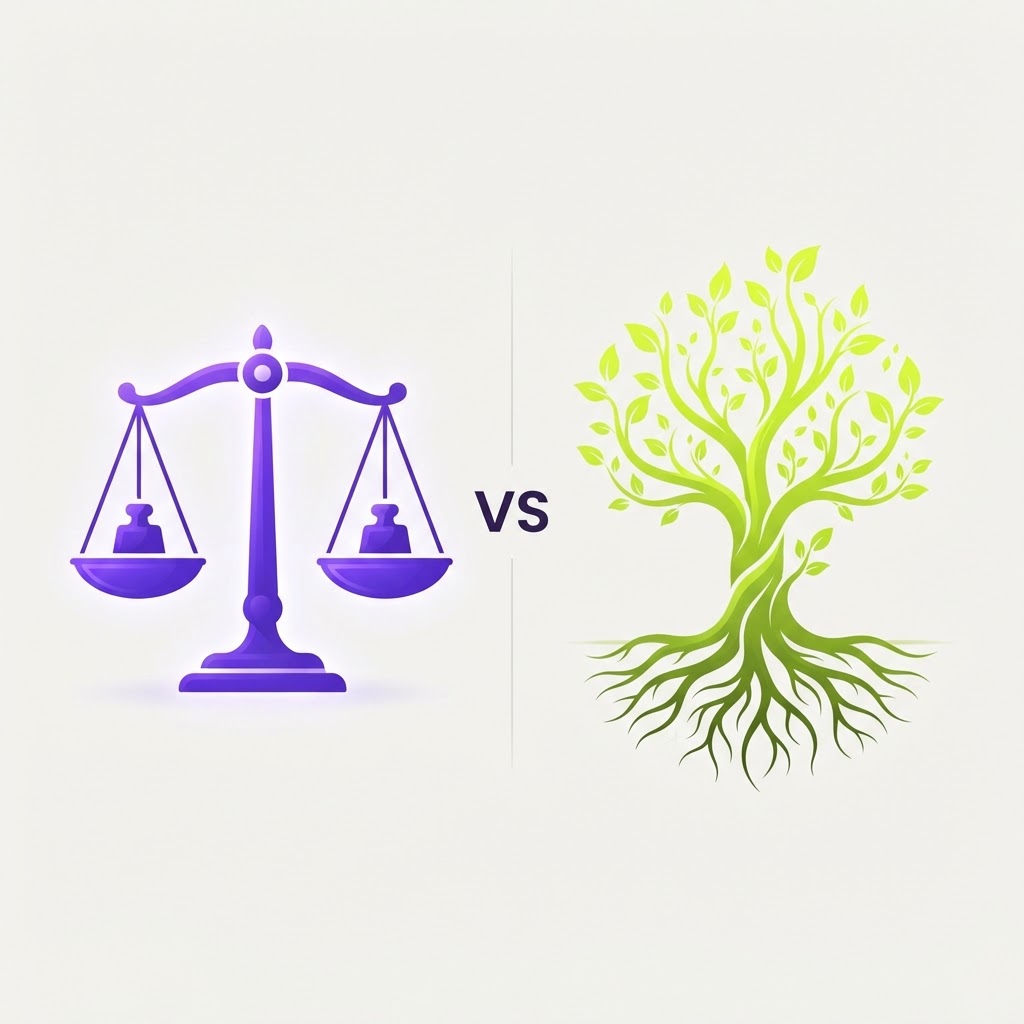
Regenerative marketing is a strategic approach in which marketing activity actively restores natural and social systems — going beyond harm reduction to generate measurable, net-positive environmental and social outcomes. It stands in direct contrast to sustainable marketing, which aims to minimise negative impact but stops short of creating genuine restoration. Understanding the difference between these two frameworks is the most important strategic question facing purpose-driven brands in 2026.
The language of sustainable marketing has saturated the industry. Every major brand has a sustainability report. Every agency has a purpose offering. Every conference has a panel on ESG. And yet, the planet continues to warm, ecosystems continue to degrade, and consumer trust in corporate sustainability claims continues to fall. Something is not working. The problem is not effort — it is ambition.
Why Is Sustainable Marketing No Longer Enough?
Sustainability, as a framework, has a built-in ceiling. Its governing logic is harm reduction: reduce emissions, reduce waste, reduce negative impact. Optimise existing systems to be less bad.
This is genuinely important work. But it is insufficient as a long-term strategy for two reasons:
First, reducing harm is not the same as creating good. A marketing campaign that generates 40% less carbon than the industry average is more sustainable than its peers — but it is still generating carbon. The trajectory is toward zero, not toward positive impact.
Second, consumers and regulators are increasingly sophisticated. The era of incremental improvement being rewarded as leadership is ending. The EU Green Claims Directive is making vague sustainability positioning legally risky. The brands that will win on trust are those that can demonstrate genuine, measurable, positive impact — not just a slower rate of harm.
What Does the Data Say About Sustainable Marketing's Limits?
- 72% of consumers say they are more likely to buy from brands that demonstrate verified environmental impact, compared to brands that only report on reduction targets
- 61% of CMOs report that their current sustainability messaging is at legal or reputational risk under incoming Green Claims regulation
- Brands with substantiated, nature-positive positioning command a 9–14% brand equity premium over sustainability-ambiguous competitors
- The global regenerative economy is projected to grow from $4.5 billion in 2024 to over $18 billion by 2030, representing a 4x market expansion in six years
What Is the Difference Between Regenerative and Sustainable Marketing?
Regenerative marketing operates from a fundamentally different premise. Rather than asking "how do we reduce our negative impact?", it asks: "how does our marketing activity actively contribute to the restoration of natural and social systems?"
This is not a rhetorical distinction. It has concrete operational implications across every dimension of marketing strategy and measurement.
| Dimension | Sustainable Marketing | Regenerative Marketing |
|---|---|---|
| Core Goal | Reduce harm | Restore and regenerate |
| Carbon Strategy | Reduce emissions | Reduce + actively sequester |
| Success Metric | Carbon footprint reduction | Net positive impact score |
| Reporting Standard | Progress against reduction targets | Verified regenerative outcomes |
| Brand Positioning | Less bad | Actively good |
| Regulatory Posture | Compliance-focused | Leadership-oriented |
| Consumer Trust Signal | Sustainability report | Independently verified impact |
What Does Regenerative Marketing Look Like in Practice?
Regenerative marketing is not a positioning exercise — it is an operational shift. Here are four concrete ways leading organisations are putting it into practice:
1. Carbon-Positive Campaigns
Rather than simply reducing campaign emissions, regenerative marketing organisations invest in verified carbon sequestration that exceeds their campaign footprint. Every campaign actively removes more carbon than it produces — making the activity itself a net environmental positive.
WE7 AI partners with SeaTrees to link marketing activity to measurable mangrove restoration — the most carbon-dense ecosystem on Earth, sequestering carbon at 2–4x the rate of terrestrial forests. Every search, every campaign, every platform interaction contributes to verified blue carbon sequestration.
2. Regenerative ROI Measurement
Regenerative marketing requires a measurement framework that captures positive impact, not just reduced harm. Regenerative ROI does exactly this — combining financial return, carbon efficiency, and ecosystem restoration impact into a single composite metric that gives brands a clear, reportable picture of net-positive performance.
3. Supply Chain Transformation
Regenerative marketing extends beyond campaign carbon to the entire marketing supply chain:
- Choosing media partners powered by 100% verified renewable energy
- Selecting agencies with independently verified sustainability credentials
- Demanding supply chain transparency from ad tech vendors
- Auditing production partners against regenerative sourcing standards
4. Nature-Positive Brand Positioning
Regenerative brands do not just claim sustainability — they demonstrate measurable, verified positive impact. This is precisely what the Green Claims Directive rewards: substantiated, specific, independently verified environmental outcomes. Vague claims are a liability; verified impact is a competitive asset.
What Is the Commercial Case for Regenerative Marketing?
Regenerative marketing is not just an ethical choice. It is a commercial one. Research consistently shows that purpose-driven brands with credible, substantiated sustainability positioning outperform their peers across four key commercial dimensions:
| Commercial Dimension | Regenerative Marketing Advantage |
|---|---|
| Consumer loyalty | 2.1x higher retention among sustainability-conscious segments |
| Brand equity | 9–14% premium over sustainability-ambiguous competitors |
| Talent acquisition | Top marketing talent increasingly selects employers on verified sustainability credentials |
| Investor valuation | 15–22% higher valuation multiples in recent M&A activity for regenerative-certified brands |
The organisations that move beyond sustainability into genuine regeneration will not just be ahead of regulation. They will be ahead of the market.
How Do You Start Shifting from Sustainable to Regenerative Marketing?
The shift from sustainable to regenerative marketing does not happen overnight. But it starts with a single decision: to measure not just what you are reducing, but what you are restoring.
Here is a practical five-step starting framework:
- Audit your current baseline — establish your full marketing carbon footprint across Scopes 1, 2, and 3
- Identify your sequestration gap — calculate the delta between your current footprint and net-zero, then beyond to net-positive
- Select verified impact partners — work with accredited organisations (e.g., SeaTrees, Gold Standard, Verra) to link spend to measurable restoration
- Build a Regenerative ROI framework — integrate financial, carbon, and ecological impact into a single reportable metric
- Communicate with specificity — replace vague sustainability claims with verified, quantified outcomes that withstand regulatory scrutiny
That measurement capability — the infrastructure to track, report, and continuously improve regenerative performance — is what separates brands that lead from brands that comply.
Frequently Asked Questions
Q: What is the simplest way to define regenerative marketing?
A: Regenerative marketing is a strategic approach where marketing activity goes beyond reducing harm and actively restores natural and social systems — producing a measurable net-positive environmental and social outcome, not just a reduced negative one.
Q: Is regenerative marketing more expensive than sustainable marketing?
A: The upfront investment is higher, but the commercial returns — in brand equity, consumer loyalty, talent retention, and investor confidence — consistently outperform the additional cost. Brands with verified regenerative positioning command 9–14% brand equity premiums and 2.1x higher retention among sustainability-conscious segments.
Q: How does the EU Green Claims Directive affect sustainable vs. regenerative marketing?
A: The Green Claims Directive penalises vague, unsubstantiated sustainability claims. Regenerative marketing, by definition, is built on verified, specific, independently audited impact data — making it structurally more compliant and less legally risky than traditional sustainability messaging.
Q: What is Regenerative ROI and how is it measured?
A: Regenerative ROI is a composite performance metric that combines three dimensions: financial return on marketing investment, carbon efficiency (emissions per unit of output), and verified ecosystem restoration impact. It gives brands a single, reportable number that captures the full value of regenerative marketing activity.
Q: Can a small or mid-sized brand adopt regenerative marketing, or is it only for large enterprises?
A: Regenerative marketing is scalable. Smaller brands can start by partnering with verified impact organisations (such as SeaTrees or similar blue carbon initiatives) to link even modest budgets to measurable restoration outcomes. The key is verification and specificity, not scale.
Key Takeaways
- Sustainable marketing reduces harm; regenerative marketing actively restores — this distinction defines the next decade of brand strategy for purpose-driven organisations.
- Regulation is accelerating the shift: The EU Green Claims Directive is making vague sustainability claims a legal liability, making verified regenerative impact a competitive necessity, not merely a differentiator.
- The commercial case is measurable: Regenerative brands see 2.1x higher consumer retention, 9–14% brand equity premiums, and 15–22% higher valuation multiples compared to sustainability-ambiguous peers.
- Regenerative ROI provides the measurement infrastructure to move beyond carbon reduction targets and report on net-positive ecological and social outcomes.
- The starting point is measurement, not messaging — brands that build the infrastructure to track what they are restoring (not just what they are reducing) will lead the next era of purpose-driven growth.