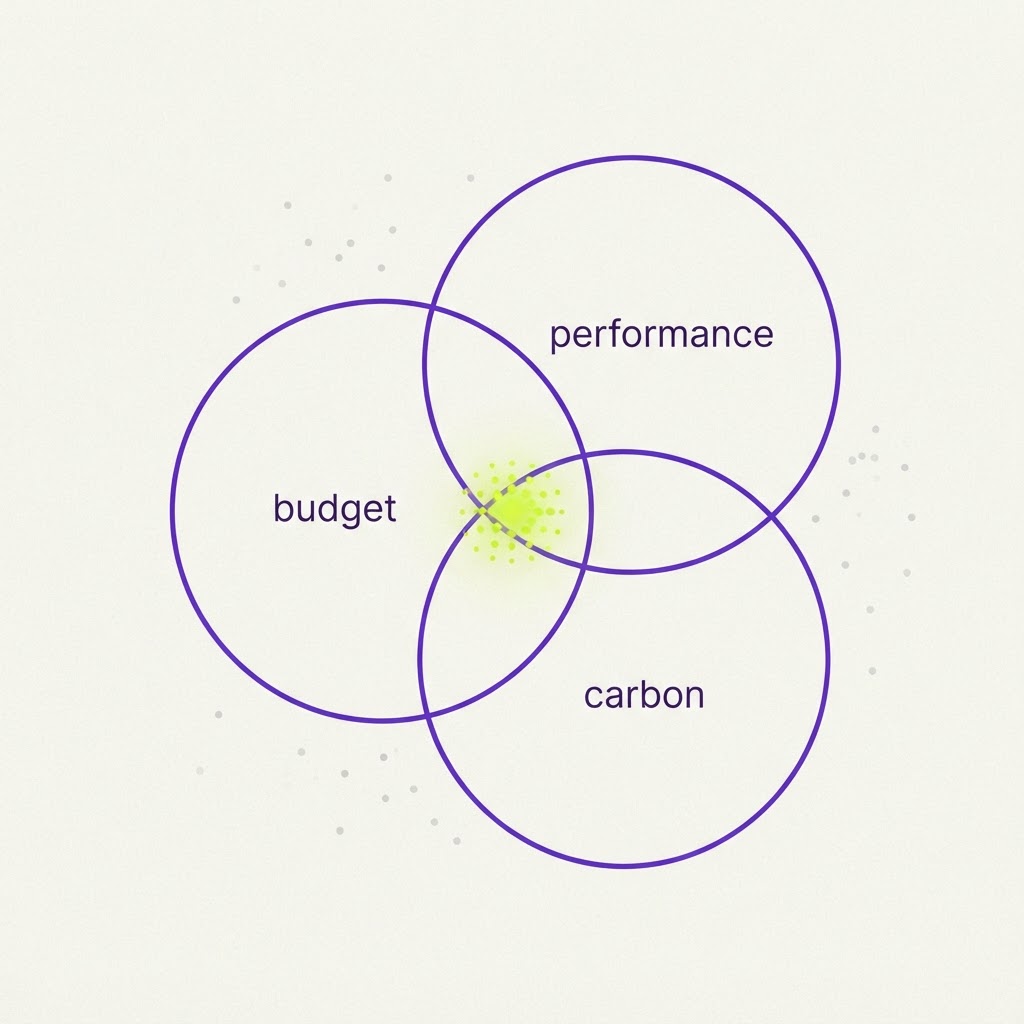
Enterprise Marketing in the Age of Automation Risk
Marketing is no longer just a growth engine. It is becoming one of the largest automation environments inside the enterprise. Speed is not the same as control, and automation without decision architecture becomes risk amplification.

Enterprise marketing in the age of automation risk is the growing reality that modern marketing functions have become complex, semi-autonomous automation environments inside large organizations — where AI-driven systems make thousands of decisions daily without structured human oversight, creating compounding strategic, regulatory, reputational, and environmental risks. Marketing is no longer just a growth engine. It is becoming one of the largest automation environments inside the enterprise, and automation without decision architecture becomes risk amplification.
From AI-generated content to automated bidding systems, predictive targeting, dynamic pricing, personalization engines, and real-time campaign optimization — marketing is now deeply embedded in hyperautomated infrastructure. But speed is not the same as control.
Key Data Points
| Metric | Benchmark |
|---|---|
| Average enterprise MarTech stack size (2024) | 90+ tools per organization |
| Share of media buying now AI-assisted | ~65% of programmatic spend |
| Enterprises with formal marketing AI governance | Fewer than 15% |
| Daily automated micro-decisions in a mid-size enterprise marketing stack | 10,000–100,000+ |
| Fortune 500 companies with net-zero commitments | 80%+ — yet carbon is absent from most marketing optimization logic |
| Governance gap discovery timing | Most enterprises identify the gap only after a reputational or regulatory friction event |
What Is Hyperautomation in Marketing Technology?
Over the last five years, marketing technology stacks have evolved from tool ecosystems into semi-autonomous systems. Key capabilities now running at machine speed include:
- AI-driven media buying
- Generative content pipelines
- Automated experimentation loops
- Predictive customer scoring
- Cross-channel orchestration engines
What once required teams now runs in dashboards. Marketing decisions are increasingly delegated to systems that learn, optimize, and scale faster than human review cycles can keep up.
The result is efficiency — but also opacity.
CMOs often cannot fully explain:
- Why certain audiences are prioritized
- How certain bids are adjusted
- Why certain messages are generated
- How sustainability trade-offs are calculated
Hyperautomation increases output. It also increases exposure. What is missing is not innovation — it is structured decision governance embedded inside growth systems.
How Are Agencies Accelerating AI Risk for Enterprises?
A second layer of complexity sits outside the enterprise: agencies. Agencies are rapidly integrating AI into:
- Creative production
- Media allocation
- Optimization scripts
- Analytics reporting
- Audience segmentation
This creates a structural shift. Marketing execution is now partially controlled by third-party AI tools — often without centralized oversight of how those systems influence enterprise objectives, sustainability commitments, or long-term brand credibility.
Leadership intent ≠ Operational AI behavior.
That divergence is rarely visible until friction appears — reputationally, operationally, or regulatorily. This is where enterprises begin to realize that AI governance cannot remain isolated from marketing decision flows.
What Happens When Machines Make Marketing Decisions?
Automation does not just optimize tasks. It reallocates authority.
When AI systems:
- Adjust budget allocation automatically
- Generate campaign variants
- Optimize targeting parameters
- Decide performance thresholds
...they are making decisions — not merely supporting them.
The key question becomes: Who owns the logic behind those decisions?
Without a clear decision architecture, automation silently reshapes growth strategy. In enterprise practice, performance metrics are frequently optimized — but decision quality is rarely examined. The difference is critical.
What Are Risk Amplification Loops in Marketing Automation?
Automation amplifies what it is given. This creates self-reinforcing risk amplification loops:
| If the input is... | Automation amplifies... |
|---|---|
| Misaligned performance incentives | Accelerated misalignment |
| No carbon impact variable | Pure short-term ROI optimization |
| Unclear messaging boundaries | Ambiguity at scale |
| Undefined oversight triggers | Unchecked behavioral drift |
These loops produce four categories of compounding risk:
- Incentive distortion — optimizing for the wrong outcomes, faster
- Speed without oversight — decisions outpacing human review
- Externalized environmental cost — carbon impact invisible to the system
- Behavioral misuse — AI scaling messaging that no human explicitly approved
Risk does not emerge from a single error. It emerges from scaled systems operating without structured design.
Why Does a Hidden Governance Gap Exist in Enterprise Marketing?
Most enterprises have governance frameworks for:
- Data privacy and security
- Financial controls and procurement
- Legal compliance and risk management
But fewer than 15% have governance for marketing decision systems. The gap is not technical — it is organizational.
Marketing automation operates in a governance vacuum because of a four-way accountability mismatch:
| Stakeholder | Their View of the Problem |
|---|---|
| IT | It's marketing's domain |
| Legal | It's a vendor management issue |
| Marketing | It's innovation freedom |
| Risk Management | Doesn't know where to look |
Meanwhile, these systems are making thousands of micro-decisions daily that compound into strategic direction shifts no single person authorized.
What Is the Carbon Blind Spot in Marketing Automation?
Every automated marketing decision carries a carbon footprint:
- Server compute for AI processing
- Data transfer and storage
- Ad serving and content delivery
- Website interactions and user sessions
Yet most marketing automation platforms optimize exclusively for:
- Conversion rates
- Click-through rates
- Cost per acquisition
- Return on ad spend
Carbon impact is invisible to the optimization logic. This creates a fundamental misalignment: enterprises commit to net-zero targets — more than 80% of Fortune 500 companies have done so — while their marketing systems optimize for maximum carbon-intensive engagement.
The automation doesn't know. It can't know — unless carbon awareness is designed into the decision architecture from the start.
How Should Human Oversight Be Designed for AI-Driven Marketing?
Responsible AI in marketing is not about limiting innovation. It is about designing oversight that matches system complexity.
Effective oversight architecture includes five components:
- Decision mapping — clarifying human vs. machine authority for each decision type
- Escalation pathways — defining when and how automation pauses for human review
- Behavioral risk identification — proactively surfacing where AI behavior may diverge from intent
- Carbon-aware allocation variables — embedding environmental cost into optimization logic
- Agency governance alignment — extending oversight frameworks to third-party AI usage
Oversight must be architectural — not reactive. Policies alone do not control systems. Design does.
What Is the Decision Architecture Framework for Marketing Governance?
Structured decision governance requires three layers:
Layer 1: Decision Classification
Tier 1 — Strategic decisions requiring human judgment:
- Brand positioning shifts
- New market entry
- Crisis response
- Major campaign concepts
Tier 2 — Tactical decisions with human oversight:
- Campaign budget allocation
- Audience targeting strategy
- Creative testing frameworks
- Performance threshold adjustments
Tier 3 — Operational decisions with automated execution:
- Bid optimization within parameters
- Content variant generation
- Tactical media adjustments
- Performance reporting
Layer 2: Boundary Conditions
Define clear limits for automated systems:
- Budget caps and allocation boundaries
- Audience exclusion zones
- Brand safety parameters
- Carbon intensity thresholds
- Message tone and voice guardrails
Layer 3: Accountability Mapping
For every automated decision process, document:
- What decision is being made
- Who has final authority
- What triggers human review
- How the decision will be explained
How Do You Design Safer Growth Systems for Enterprise Marketing?
Enterprise marketing must evolve from campaign execution to decision system design. Safer growth systems require:
- Clear decision governance
- Responsible AI integration
- Carbon-aware optimization models
- Cross-functional oversight alignment
- Technical feasibility validation
This is where marketing transformation, Responsible AI thinking, and infrastructure strategy converge.
Growth must become:
| Dimension | Governing Question |
|---|---|
| Explainable | Can we articulate why decisions were made? |
| Defensible | Can we justify decisions to stakeholders? |
| Sustainable | Do decisions align with carbon commitments? |
| Governed | Are decisions made within defined authority structures? |
Why Is Competitive Advantage Shifting From Speed to Governance?
In the next five years, competitive advantage in marketing will shift:
| Old Model (2020–2024) | New Model (2025–2030) |
|---|---|
| Who has the most AI tools | Who maintains strategic clarity at scale |
| Who automates fastest | Who embeds responsibility into automation |
| Who scales biggest | Who builds governance into growth systems |
The winners will be enterprises that realize: automation is not the problem. Unstructured automation is.
What Is the Right Implementation Sequence for Marketing AI Governance?
Most enterprises approach this backwards:
The Common (Broken) Sequence:
- Deploy automation tools
- Scale usage across teams
- Realize governance gap
- Try to retrofit controls
- Struggle with cultural resistance
The Right Sequence:
- Map current decision architecture
- Design governance framework
- Pilot automation with governance embedded
- Scale systems with oversight built in
- Continuously evolve as AI capabilities advance
Governance cannot be bolted on. It must be designed in.
What Does the Path Forward Look Like for Each Enterprise Leader?
The future of enterprise marketing will not be defined by who deploys AI fastest — but by who embeds intelligence, responsibility, and oversight directly into their growth architecture.
For CMOs:
- Own the decision architecture, not just the tools
- Build governance before scaling automation
- Integrate carbon awareness into optimization logic
For CIOs:
- Recognize marketing as a critical automation environment
- Extend enterprise governance into marketing systems
- Enable carbon-aware infrastructure
For Risk & Compliance:
- Understand marketing automation as operational risk
- Build oversight frameworks that match system complexity
- Monitor decision quality, not just policy compliance
For Agencies:
- Make AI usage transparent to clients
- Build governance into delivery processes
- Align automation with client strategic objectives
Why Does Structure Enable Speed in Marketing Automation?
Automation accelerates everything — including mistakes.
| Without Decision Architecture | With Proper Governance |
|---|---|
| Compliance liability | Competitive advantage |
| Reputational risk | Scaling mechanism for responsible growth |
| Carbon amplification engine | Carbon-aware optimization system |
| Strategic drift accelerator | Strategic enablement platform |
The choice is not between innovation and control. It is between structured innovation and chaotic acceleration. Because in the age of automation, scale without structure is not innovation. It is exposure.
Frequently Asked Questions
Q: What is automation risk in enterprise marketing?
A: Automation risk in enterprise marketing refers to the compounding strategic, regulatory, reputational, and environmental risks that arise when AI-driven marketing systems make decisions at scale without structured human oversight, clear decision architecture, or governance frameworks aligned with enterprise objectives.
Q: Why is marketing automation considered a governance problem, not just a technology problem?
A: Because the gap is organizational, not technical. IT, legal, marketing, and risk management each view marketing AI as someone else's responsibility, creating a governance vacuum. Meanwhile, automated systems make thousands of micro-decisions daily that collectively shift strategic direction — without any single person authorizing the outcome.
Q: How does marketing automation contribute to carbon emissions?
A: Every automated marketing decision consumes compute resources, data transfer, ad serving infrastructure, and user-session energy. Since most platforms optimize only for conversion rates, CTR, CPA, and ROAS, carbon impact is invisible to the optimization logic — creating a direct conflict with corporate net-zero commitments held by more than 80% of Fortune 500 companies.
Q: What is a decision architecture framework for marketing?
A: A decision architecture framework classifies marketing decisions into three tiers — strategic (human-only), tactical (human-supervised), and operational (automated within boundaries) — and pairs each tier with boundary conditions and accountability mapping to ensure every automated decision has a defined owner, scope, and escalation path.
Q: How should enterprises govern third-party agency AI usage?
A: Enterprises should require agencies to disclose which AI tools are used in delivery, define contractual governance requirements that align third-party automation with client strategic objectives and brand safety parameters, and audit AI-influenced outputs as part of standard performance reviews. Leadership intent must be traceable into operational AI behavior across all delivery partners.
Q: What percentage of enterprises currently have formal marketing AI governance?
A: Fewer than 15% of enterprises have formal governance frameworks specifically covering marketing AI and automated decision systems. Most identify the governance gap only after a reputational or regulatory friction event — by which point retrofitting controls is significantly more costly than building them in from the start.
Key Takeaways
- Marketing is now one of the largest automation environments in the enterprise — operating with AI systems that make 10,000 to 100,000+ daily micro-decisions that compound into strategic outcomes no single person authorized.
- The governance gap is organizational, not technical — IT, legal, marketing, and risk management each defer responsibility, leaving marketing AI in a structural vacuum that fewer than 15% of enterprises have formally addressed.
- Automation amplifies inputs, including bad ones — misaligned incentives, unclear messaging, and absent carbon variables are all scaled faster and further by AI systems operating without boundary conditions.
- The right implementation sequence is governance-first, then scale — enterprises that deploy automation before designing governance frameworks will spend more time and capital retrofitting controls than building them correctly from the start.
- Competitive advantage is shifting from speed to governed intelligence — the enterprises that win through 2030 will be those that make their automation explainable, defensible, sustainable, and governed by design.