Social Media Manager
Private · Admin only
Can ChatGPT Find Your Next Growth Opportunity? Not Without the Evidence.
Can ChatGPT find your next growth opportunity? Not without the evidence. The difference between generic LLM ideation and enterprise evidence-based intelligence — and why regenerative growth has no answer in the public record.

Your Agency Already Has AI. So Why Would a Brand Need Another Intelligence Layer?
Your agencies already have AI. So why would a brand need another intelligence layer? The multi-agency, multi-market problem no single agency is built to solve — and why independence matters more than capability.

Why AI Media Optimization Isn't the Same as Decision Intelligence
Optimization asks 'How can I execute this better?' Decision intelligence asks 'Should I spend here in the first place?' Why most marketing AI refines the wrong decision instead of questioning it.

The Hidden Cost of Media Waste: Budget, Performance and Carbon
Why wasted impressions cost more than media dollars — the three hidden costs of media waste: budget, performance and carbon, and why they only become visible when the signals are read together.
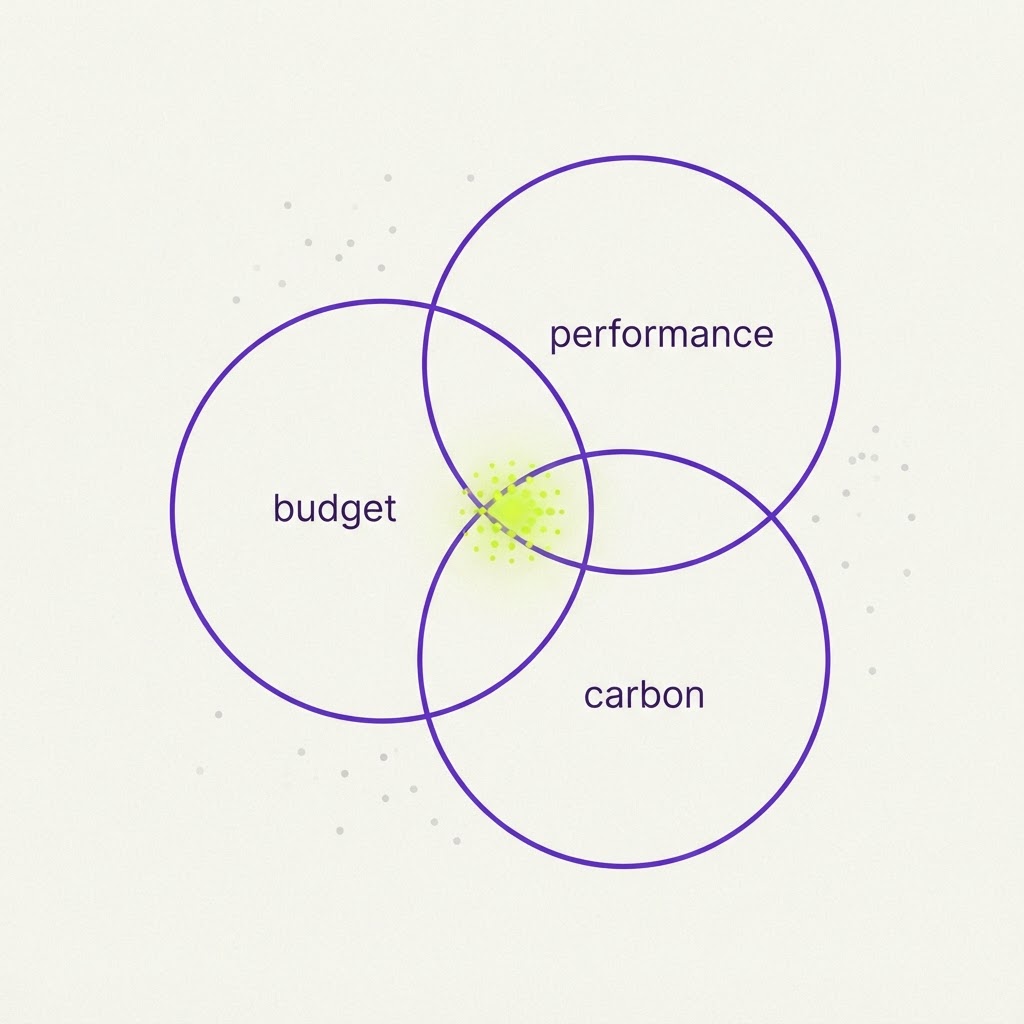
Your Marketing Data Has a Waste Problem — Not a Data Problem
Why more dashboards aren't creating better media decisions — and what it takes to turn scattered marketing evidence into intelligence that actually moves the money better.

Agentic Advertising Carbon: The Hidden Emissions in AI-Agent Media Buying
As AI agents increasingly buy and optimize digital advertising autonomously, the carbon footprint of programmatic media buying is accelerating. Agentic advertising carbon — the emissions generated by agent-to-agent ad transactions, real-time bidding, and automated optimization — is emerging as the next blind spot in sustainable marketing. Here's what it is, why it matters, and how to measure it.

What Is Carbon-First Marketing Intelligence? The Next Frontier
Carbon-First Marketing Intelligence is the AI-powered capability that combines pre-spend carbon simulation, performance prediction, and compliance automation into a single decision layer. Here's what it is and why it changes everything.

What Is Scope 3 Marketing Emissions? A Complete Guide
Scope 3 marketing emissions are the indirect greenhouse gas emissions generated by your marketing and advertising activities — from programmatic ad serving to data centers to creative production. Here's how to measure and reduce them.

What Is ESG Marketing? Framework, Compliance, and Best Practices
ESG marketing is the practice of aligning marketing strategy, messaging, and measurement with Environmental, Social, and Governance principles — while avoiding greenwashing. Here's the complete framework for 2026.

What Is Regenerative Innovation in Marketing? Beyond Sustainability
Regenerative innovation in marketing goes beyond reducing harm to actively restoring ecosystems and creating positive environmental and social outcomes through marketing strategy. Here's the complete framework.

What Is Carbon-First Marketing? A Complete Guide for 2026
Carbon-First Marketing is a strategic framework that places carbon accountability at the center of every marketing decision — before the spend, not after. Here's what it means, why it matters, and how to implement it.

The Carbon Leak in Your Marketing Budget: Measuring Digital Media Carbon Intensity
30–40% of digital marketing spend vanishes into channels with vastly different carbon footprints. Here's how CMOs can measure digital media carbon intensity, track their marketing carbon footprint, and optimize for both ROI and ECGT compliance using the Campaign Carbon Score.

Where Does 30–40% of Your Marketing Budget Actually Go?
30–40% of marketing budgets produce no measurable return. The waste shows up twice — once as an unexplained line item, once as emissions you didn't ask for. Here's how to find it before you spend it.

Carbon Waste = Budget Waste: Why Pre-Spend Simulation Changes Marketing
Carbon waste and budget waste are the same problem. WE7's pre-spend simulation technology models performance, cost, and carbon impact before budget is committed — turning sustainability into a cost recovery tool.

What Is Campaign Carbon Score (CCS™)? A New Metric for Sustainable Advertising
Campaign Carbon Score (CCS™) is WE7 AI's proprietary 0–100 metric that measures carbon efficiency before a campaign launches — using GMSF v1.3 benchmark data as input, with WE7's proprietary scoring methodology on top.

GMSF v1.3 by Ad Net Zero: What It Means for Marketers
Ad Net Zero published GMSF v1.3 at Cannes Lions 2026, covering 95% of global media spend with a consistent activity-based framework. Here's what changed from v1.2, what it means for CSRD, ECGT, and SB 253 compliance, and how WE7 AI complements GMSF v1.3 with SDG alignment and greenwashing detection.

Ad Net Zero, GMSF, and the Future of Carbon-First Marketing
Marketing has always had a measurement problem — we've been measuring the wrong things in isolation. As Ad Net Zero and GMSF establish shared standards, the real opportunity is using carbon intelligence before budgets are committed, not after.

Carbon-First Marketing Forum Recap: What Happened at UN Plaza on June 10, 2026
On June 10, 2026, 40 senior leaders gathered at UN Plaza, New York for the Carbon-First Marketing Forum — the first event of its kind to define a new measurement standard: Cost + Carbon + Performance. Here is what was discussed, what was agreed, and why it matters.

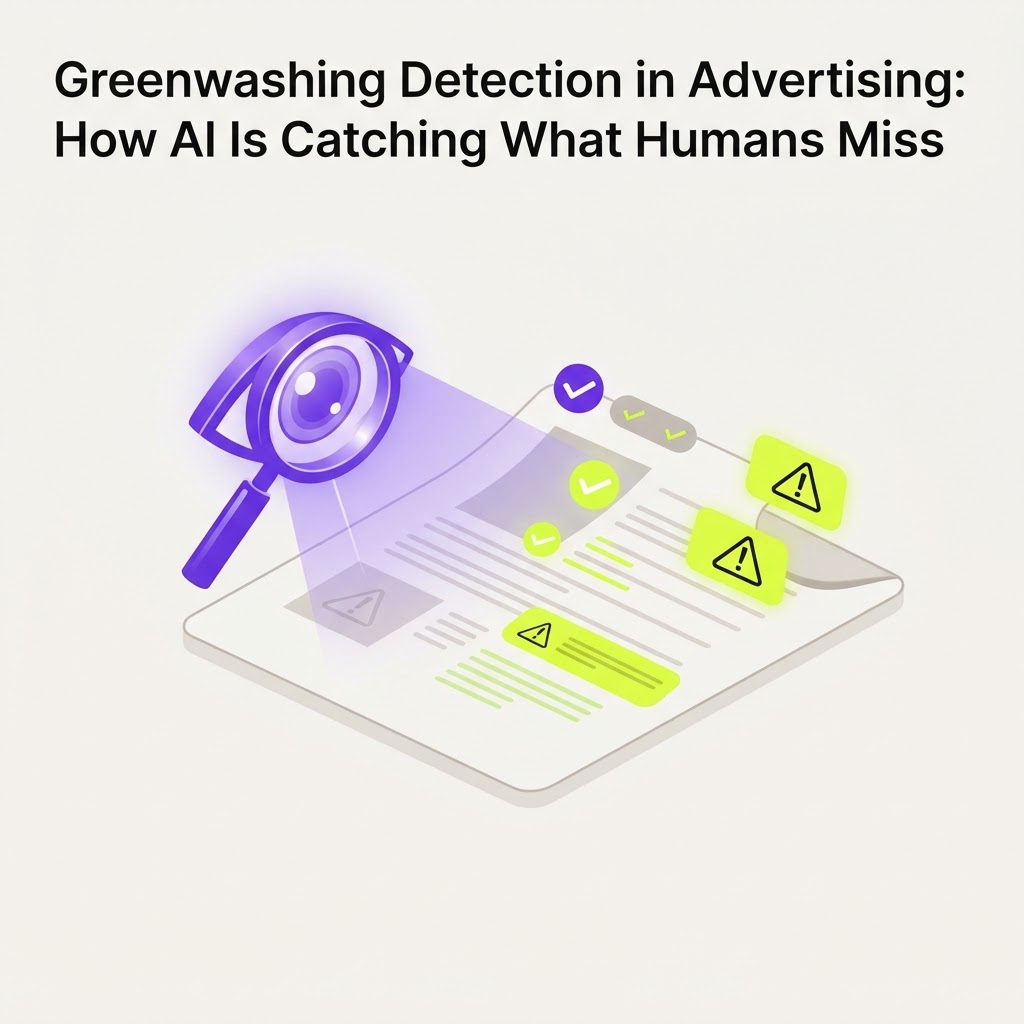
Greenwashing Detection in Advertising: How AI Is Catching What Humans Miss
As the EU Green Claims Directive and FTC Green Guides tighten enforcement, brands can no longer rely on gut feel to vet sustainability claims. Here's how AI-powered greenwashing detection works — and why it matters for your next campaign.
CSRD, Omnibus & The Blind Spot: Digital Advertising's Carbon Footprint
CSRD changes one fundamental thing — sustainability is no longer a narrative. It's measurable, auditable, and it includes your digital advertising spend. Here's what marketing teams need to know.

Why Measurement Is No Longer Enough in Marketing
The industry has mastered measurement. But in a world demanding accountability before the spend, not after, optimization is no longer the highest leverage. The future belongs to decision intelligence.

ECGT 2026: What Every CMO Needs to Know Before September
The EU's Empowering Consumers for the Green Transition Directive takes effect in September 2026. Here's what marketing teams must do now to avoid greenwashing penalties and protect brand integrity.

Sustainability Teams Don't See Marketing Emissions — And That's a Boardroom Problem
Chief Sustainability Officers and Chief Marketing Officers operate in parallel worlds. One owns the carbon targets. The other controls the budget that generates the emissions. Until they share the same data, ESG reporting will remain incomplete.

40% of Paid Media Is Never Seen by a Human
Ad fraud, bot traffic, and invalid impressions silently consume nearly half of global digital ad budgets. Here is what the data says — and what AI-driven waste elimination can do about it.

Most ESG Reports Ignore Marketing Completely
Brands publish detailed ESG reports covering supply chains, packaging, and operations — yet the largest controllable source of Scope 3 emissions is quietly missing: the marketing budget.

From Kilifi to the World: How the Marereni Mangrove Project Is Rewriting What Business Responsibility Looks Like
Inside the SeaTrees-verified restoration project in Kenya where 790,000 mangrove trees are being planted — and why WE7 AI is proud to be part of it.

Carbon-First Marketing Meets Responsible AI: Rethinking Growth Infrastructure
AI is rapidly transforming marketing. Sustainability is becoming a strategic priority. Yet, these two conversations are still happening in isolation. What happens when we design both into the same system?

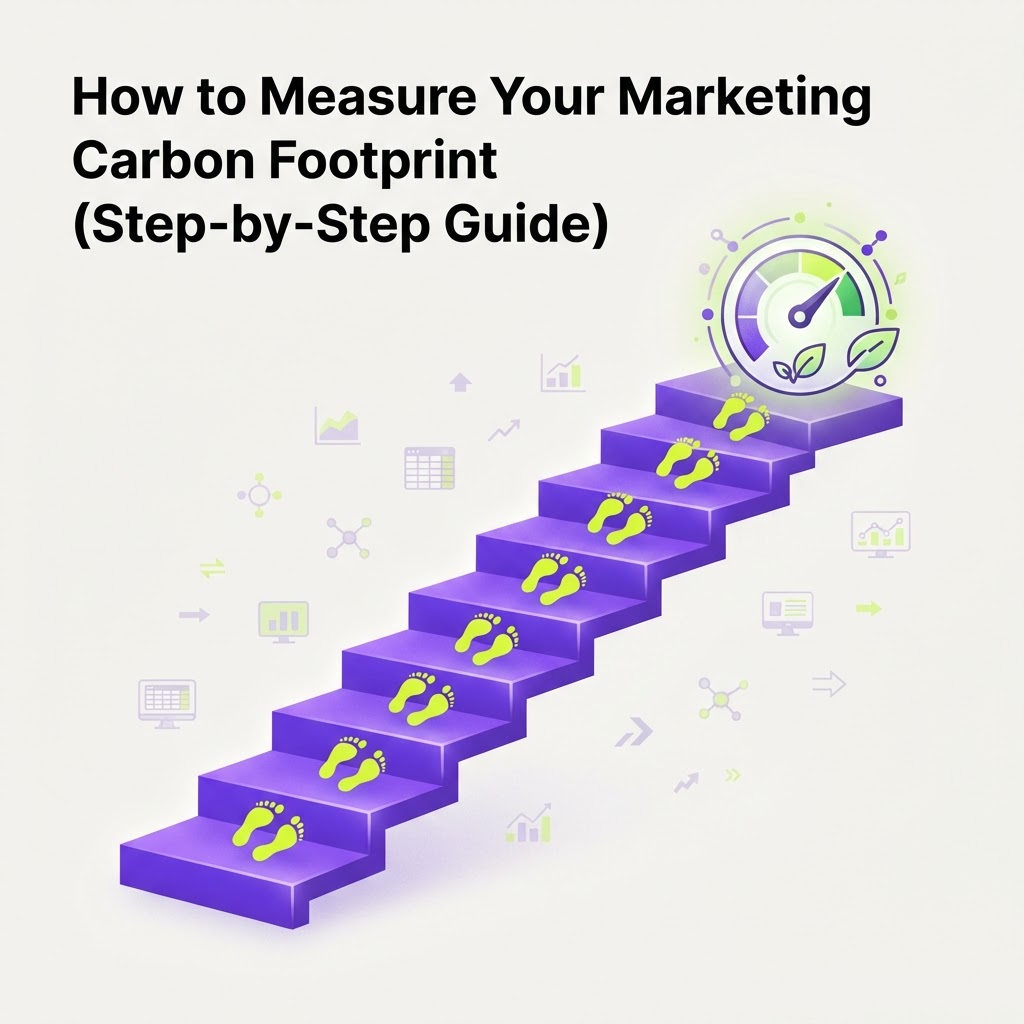
What Is Carbon-First Marketing? The Complete Guide for CMOs
Carbon-first marketing is the emerging discipline that places carbon efficiency alongside financial performance in every campaign decision. Here's what every CMO needs to know in 2026.
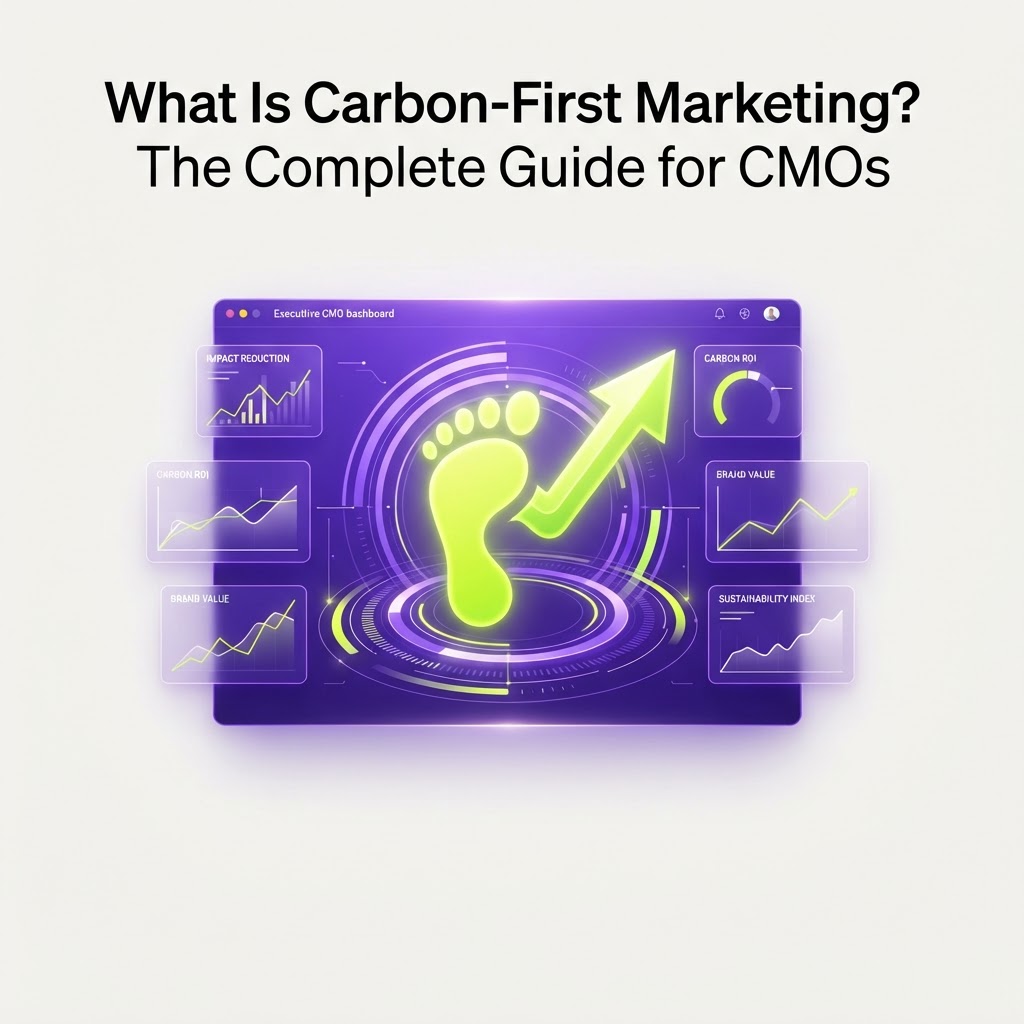
How to Measure Your Marketing Carbon Footprint (Step-by-Step Guide)
Most enterprises have no idea what their marketing carbon footprint is. This step-by-step guide shows how to measure, track, and reduce the Scope 3 emissions generated by your digital campaigns.
Carbon-Adjusted ROAS: The Marketing Metric That Changes Everything
Carbon-Adjusted ROAS is the next evolution of return on ad spend — recalculating campaign performance to account for carbon cost. Here's why it matters and how to calculate it.

CSRD Marketing Compliance: What Every CMO Needs to Know
The EU Corporate Sustainability Reporting Directive now covers marketing emissions. Here's what CSRD means for your marketing team, your campaigns, and your compliance obligations in 2026.

Regenerative Marketing vs Sustainable Marketing: What's the Difference?
Sustainable marketing aims to do less harm. Regenerative marketing actively restores. Understanding the difference is the most important strategic question for purpose-driven brands in 2026.

ESG ROI & Marketing ROI: WE7 AI Is the Bridge
Discover how Carbon-Adjusted ROAS, Carbon-per-Click, and Regenerative ROI unite ESG ROI and Marketing ROI in one platform — WE7 AI's carbon-first marketing intelligence architecture.

The SDG Framework for Enterprise CMOs: Beyond Logo-Slapping
73% of companies mention SDGs in sustainable marketing. Only 12% can substantiate their claims. A practical CSRD-ready framework for CMOs to authentically align campaigns with UN SDGs — and avoid greenwashing.
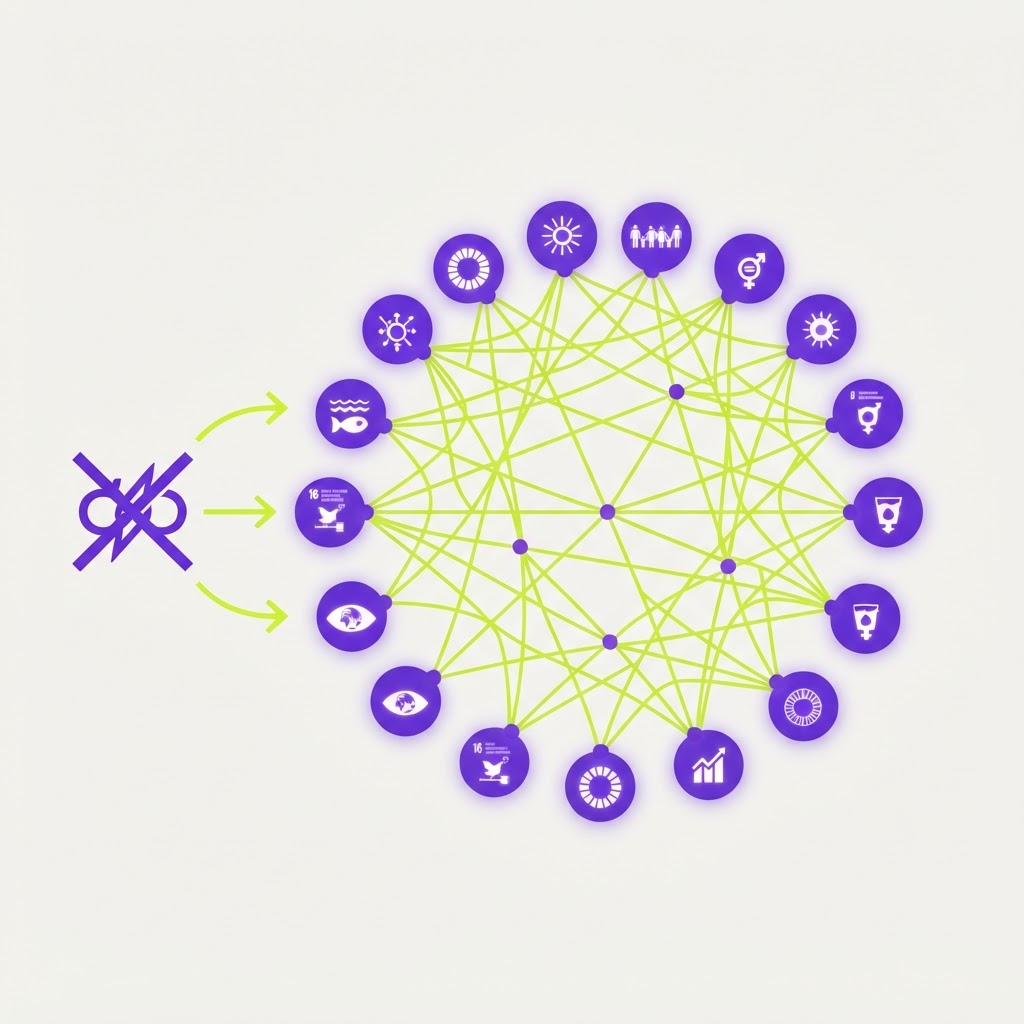
The CMO's Blindspot: Why CSRD Compliance Is Your 2026 Strategy, Not Just Your CFO's Problem
50,000 companies must comply with CSRD by Q1 2026. Most CMOs don't know it applies to them. Here's why marketing leaders need to act now — and how early movers are turning compliance into competitive advantage.

What Does a $1M Digital Campaign Really Cost the Planet?
We ran a carbon impact simulation on a $1M digital marketing campaign reaching 10 million people. The results show AI optimization delivers a 40% carbon reduction — with zero compromise on reach or budget.

The CMO & CSO Bridge: Where Marketing Performance Meets Sustainability Intelligence
Marketing and sustainability teams often work in separate worlds. WE7 AI is building the bridge — a system where every marketing decision optimizes for business performance, environmental impact, and responsible growth simultaneously.

Regenerative Growth Framework: The 7-Step System That Transforms Marketing from Extraction to Regeneration
Most marketing frameworks are built on extraction — extracting attention, extracting clicks, extracting conversions. The WE7 Regenerative Growth Framework is different. It's designed to build something back.

The Future CMO: AI, Sustainability & Marketing Accountability
Reflections from WE Regenerate – Series 2 with Thomas Kolster. Marketing is entering a structural shift — what was once framed as 'sustainable marketing' is now becoming something more fundamental: accountability.

Enterprise Marketing in the Age of Automation Risk
Marketing is no longer just a growth engine. It is becoming one of the largest automation environments inside the enterprise. Speed is not the same as control, and automation without decision architecture becomes risk amplification.

Responsible AI in Marketing: Beyond Bias and Compliance
Most marketing leaders think Responsible AI means running bias audits and getting legal sign-off. But the real risk isn't in the algorithm—it's in how AI changes human decision-making without anyone noticing.

Regenerative Innovation in Practice: How WE7 AI Is Designing a Business Model That Gives Back
Most companies measure sustainability after growth. WE7 AI takes a different approach: building impact directly into how growth works through our partnership with SeaTrees.

Climate First AI: The Future of Purpose-Driven Technology
As artificial intelligence reshapes industries, a new paradigm is emerging: Climate First AI. This approach puts environmental impact at the core of AI decision-making, proving that technology can drive both business growth and planetary regeneration.

WE Regenerate Ep. 1: From Receipts to GPS - Rethinking Marketing Intelligence
In our inaugural WE Regenerate event, co-founders Duygu Ozen and Todd Thille explored how marketing can evolve from performance-driven to performance-and-planet-driven, introducing WE7 AI's carbon-first approach and enterprise platform.

WE7 AI and Regenerative Innovation
Designing Growth That Restores, Not Just Sustains:

Why We Made Our Regenerative Marketing Search Layer Free
Most SaaS companies gate their best features behind paywalls. We made a different decision—and it's not a growth hack. It's a structural commitment to regenerative business.

Greenwashing vs. Authentic Sustainability Marketing
How to communicate impact without risking compliance penalties or brand damage.

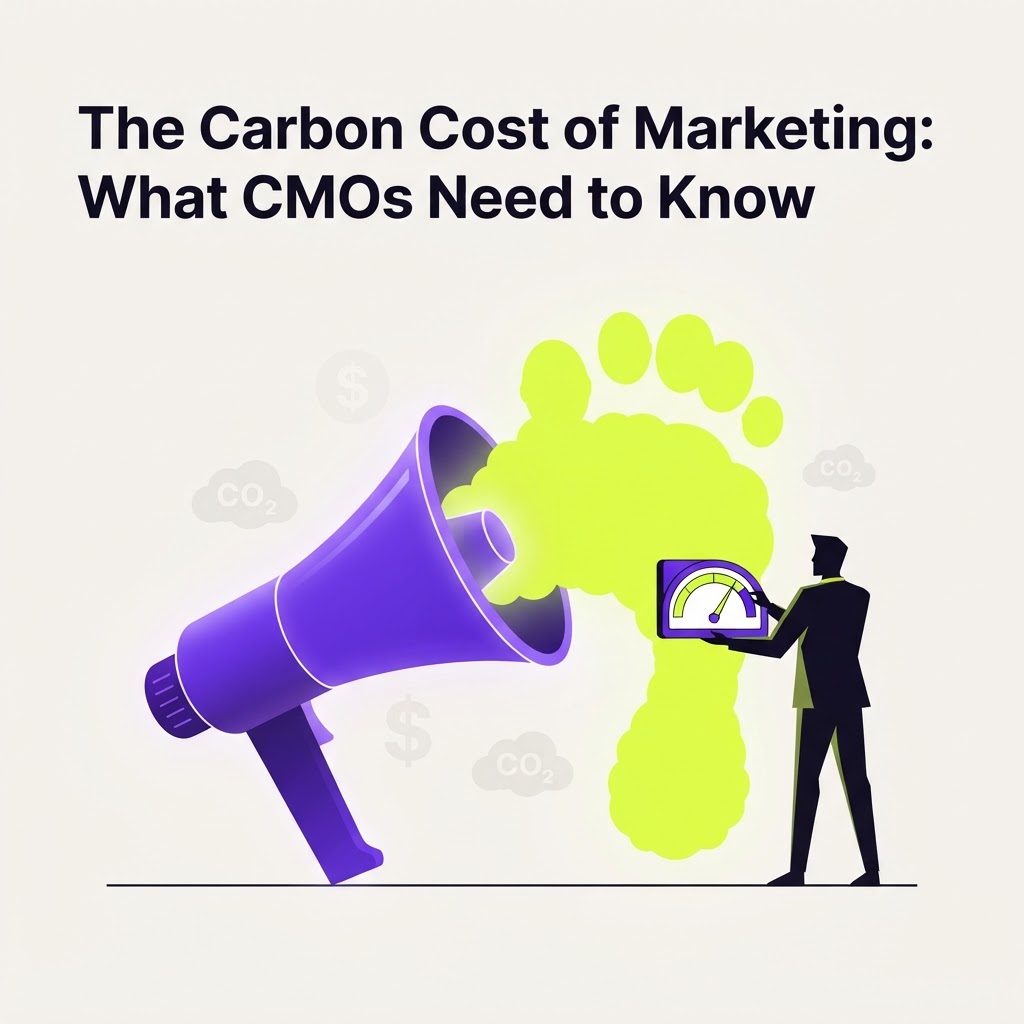
The Carbon Cost of Marketing: What CMOs Need to Know
Digital marketing generates more emissions than aviation. Here's how to reduce your footprint.
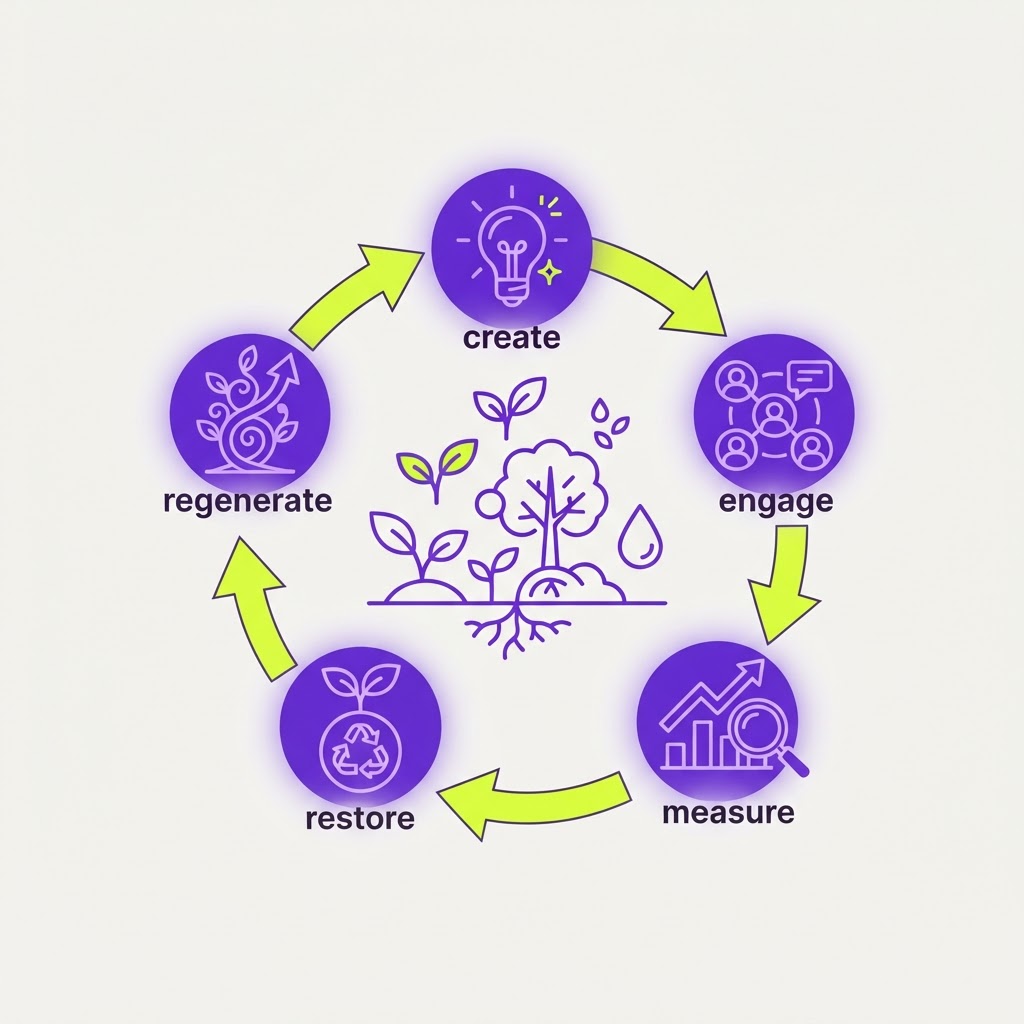
Regenerative Marketing Explained: A Visual Guide
Learn the 7-step framework that transforms marketing into a force for good.
CSRD Compliance for Marketers: A 2026 Guide
50,000+ companies must report Scope 3 marketing emissions. Are you ready?